
Offset vs. Digital Printing: A Quick Comparison Guide

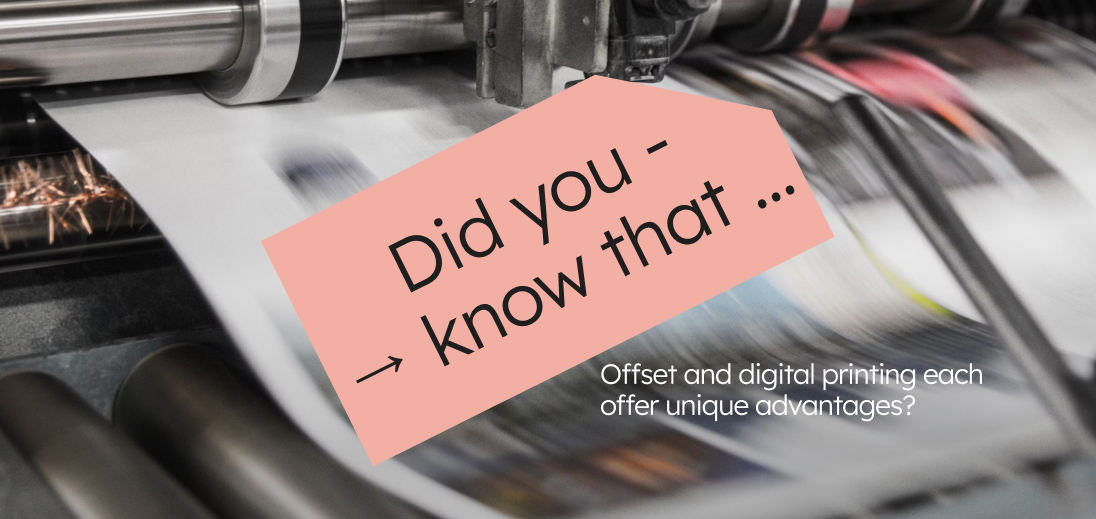
Do you know the difference between digital and offset printing? Read our quick guide to find out!
Do you know the difference between digital and offset printing? Read our quick guide to find out!
Did you know... offset printing and digital printing each offer unique advantages?
Although it may seem simple, printing is not just about putting ink on paper. The printing technique you choose can make a big difference in both the look of your product and its production cost. Whether you're creating a business flyer, a poster, a brochure, or your own custom design, selecting the right printing method is essential. Otherwise, you might end up with a disappointing final result that costs more than expected.
Understanding different printing techniques, along with their pros and cons, will help you avoid common printing mistakes. The two most common methods are offset printing and digital printing. Both are four-color printing processes, but they use very different methods to transfer ink onto paper. The right choice depends on your budget, the size of your print run, and the level of quality you're aiming for.
If this all sounds a bit overwhelming, don’t worry. This quick guide will walk you through everything you need to know about offset and digital printing.
Offset printing vs. Digital printing, what’s the difference?
Let’s start with the basics: what’s the difference between offset and digital printing? While both methods transfer ink onto a material, the way they do it is quite different. Let’s begin with the older method: offset printing.
Offset printing
Sometimes called lithography, offset printing was invented in the late 19th century. Although it's over 120 years old, offset printing is still widely used today.
The printing process is based on the interaction between water and the fatty substance, "ink". It requires several preparation steps before printing. One plate per colour must be produced using a machine called CTP (computer to plate).
In a printing group, this plate will be installed around a first cylinder which will receive the water and the ink, the ink will be transferred to a second cylinder called the blanket (rubber support) and finally the ink will be transferred to the paper. The ink deposit is therefore not done directly on the paper.
For four-color printing (cyan, magenta, yellow, black), the paper will pass through four printing groups and it is possible to replace or add custom colours or Pantone colours .
Each plate is specifically designed to hold one particular colour. A highly skilled operator mounts a series of plates, each with different patterns and colors, onto a rubber sheet called a blanket. The image on the blanket is then rolled onto the paper.
The term "offset" comes from the fact that the ink is transferred from the plate to the blanket, and only then to the paper, never directly from the plate to the paper.
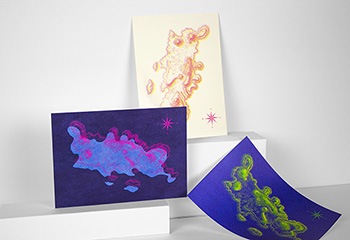 Delos series of three offset-printed cards
Developed by the agency Atelier Deux-Cé and manufactured by Atelier Bulk
Offset printing presses are large, complex machines that require expert setup and handling. However, once everything is in place, they can efficiently produce hundreds of high-quality prints at a time. Offset printing delivers sharp, consistent images with excellent colour accuracy. It also supports special finishes and precise Pantone colour matching.
Offset printing works well with all types of paper and is commonly used for large-volume printing of books, business cards, labels, packaging, posters, flyers, and brochures.
Digital printing
Digital printing first gained popularity in the early 1990s. This technology evolved from laser and inkjet printing methods developed in the 1970s and 1980s. Thanks to advancements in speed, quality, and cost-efficiency, digital printing became a serious competitor to offset printing throughout the 1990s and 2000s.
Unlike offset printing, a long-established technology, digital printing is constantly evolving. Every new advancement in software and hardware improves the quality and speed of digital printing. Instead of transferring ink to paper via plates and a blanket, digital printing applies ink or toner directly onto the print surface. There are many types of digital printing technologies, including inkjet, laser, dye-sublimation, UV printing, and electrophotographic (laser) printing.
Digital printing is a great option for short runs and print jobs that require variable data. For instance, it allows for unique details on each printed piece, making it ideal for direct mail or personalised advertising. With no costly setup or labour-intensive preparation, digital printing is perfect for short-run projects that need to be customised and delivered quickly.
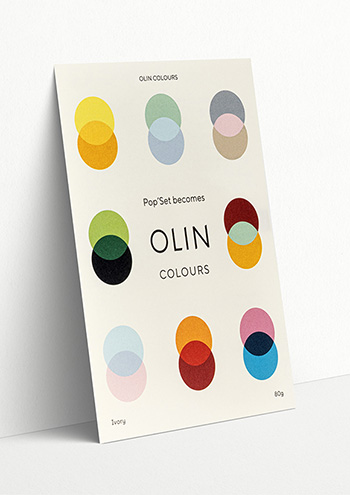 Olin Colours card leaflet
Design by Design&Practice and printed by Imprimerie du marais
However, some machines do not achieve the same print quality as offset, particularly in terms of precision and fine details.
How to choose the right printing method for your needs?
When choosing a printing technique, several criteria must be considered, including volume, speed, quality, cost, and customisation. Each process has its advantages depending on your specific needs. Here are some key elements to consider:
- Print volume: If you need to produce a large quantity of documents, offset printing is generally the best option. This process is designed for large print runs, offering optimal efficiency when the volume is high. However, for small runs, digital printing is more advantageous because it does not require expensive or complex preparation.
- Speed: If your project has a tight deadline, digital printing is often the preferred choice. Thanks to the lack of complex preparation processes, it allows for rapid print production, even for small quantities. For example, prints with variable data (such as personalised invitations or greeting cards with specific information) can be completed in record time.
- Print quality: For exceptional results, especially for prints requiring fine details, complex shading, or special finishes, offset printing is arguably the best option. It guarantees vibrant colours and increased accuracy, especially on large print runs. Digital printing, while excellent for fast, personalised prints.
- Cost: One of the biggest advantages of digital printing is its low initial cost. There are no complex setup or preparation costs, making it ideal for short runs or test projects. Conversely, offset printing has higher setup costs but becomes more economical as print volume increases. The larger the print run, the more cost-effective offset printing becomes.
- Personalisation: If you need to personalise each print with specific information (like names, numbers, addresses, or unique visual elements), digital printing is the only option. Thanks to the data and file preparation, it allows for easy and fast customisation without increasing costs.
In short, the choice between digital and offset printing will depend on your specific needs in terms of volume, quality, cost, and customisation.
For high-quality, mass-produced print runs, offset printing will be more suitable, while for small to medium-sized, quick, and personalised prints, digital printing will be more practical and economical.