
Hiroshige: Artist of the Open Road - British Museum

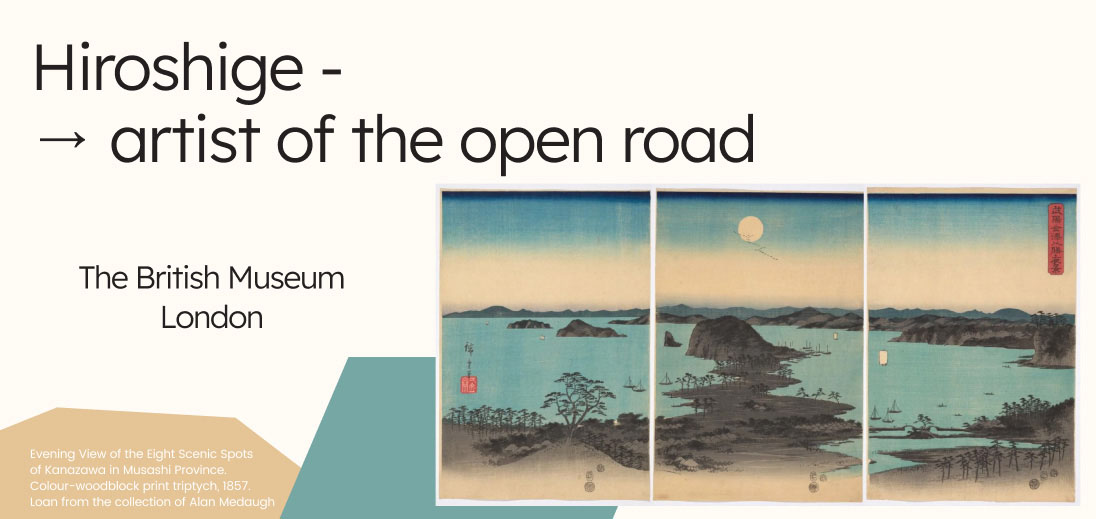
The Hiroshige: Artist of the Open Road at the British Museum, London, explores the works of one of Japan’s most important artists.
The Hiroshige: Artist of the Open Road at the British Museum, London, explores the works of one of Japan’s most important artists.
The British Museum in London offers lovers of fine art and history a rare chance to explore the works of one of Japan’s most important artists. With the Hiroshige: Artist of the Open Road exhibition, the British Museum commemorates the life and accomplishments of an extraordinary figure in Japanese culture.
Known for his exquisite prints depicting daily life, urban scenes, and nature during Japan’s Edo period (1603–1868), Utagawa Hiroshige (1797–1858) combined realism with a dreamlike aesthetic. Hiroshige’s influence on Japanese culture as well as the European art world cannot be understated.
Entrancing, elegant, and hypnotic, Hiroshige’s prints guide the onlooker through a fascinating glimpse into Japan’s past. His innovative techniques and unparalleled artistic sensibility continue to inspire and delight. The Hiroshige: Artist of the Open Road exhibition is most certainly an experience not to be missed for art lovers.
Utagawa Hiroshige – The Chronicler of Edo Japan
Although he had a difficult start in life, Utagawa Hiroshige went on to become one of the best-known, most celebrated and revered Japanese artists.
Hiroshige was born in 1797 in Edo, now Tokyo. Orphaned at the age of 13, Hiroshige took over his father’s role as a samurai fire warden. An interest in art drew him to the Utagawa school at 15, where he studied ukiyo-e printmaking under the master Utagawa Toyohiro. His early vertical prints focus on landscapes and were greatly influenced by Chinese scroll paintings and the Japanese Kanō school style.
Throughout his life, Hiroshige produced an immense body of work, creating an estimated 8,000 prints depicting everyday urban and nature scenes. His most famous series is the Fifty-Three Stations of the Tokaido (1833–34),
which was based on the artist’s travels between Edo and Kyoto. Despite being recognised as an artist during his lifetime, Hiroshige was not particularly wealthy. In his later years, he took up Buddhist monkhood and completed his now iconic One Hundred Famous Views of Edo (1856–58).
A decade after his death, Hiroshige would be hailed as a genius by major painters such as Van Gogh, Whistler, Monet, and Gauguin. His works have influenced generations of Japanese artists in their approach to composition, colour, and storytelling. One notable example is the animation director Hayao Miyazaki (My Neighbour Totoro), whose films depict nature with the same reverence and poetic qualities found in Hiroshige’s prints.
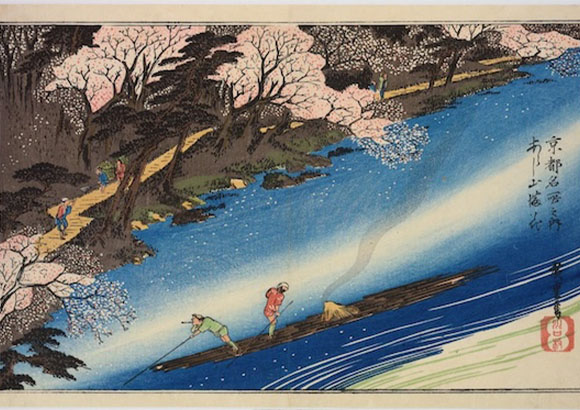 Awa: The Rough Seas at Naruto from Illustrated Guide to Famous Places in the 60-odd Provinces.
Source : Alan Medaugh, photography by Matsuba Ryōko.
The first major Hiroshige exhibition in over 25 Years
Hiroshige’s works are rarely exhibited outside of Japan. The Hiroshige: Artist of the Open Road at the British Museum is the first major showing of the artist’s prints in London in more than 25 years. It is also the first time a collection of Hiroshige’s art will be on display at the British Museum itself.
Curated by Alfred Haft, the exhibition features 35 Hiroshige prints gifted to the Museum from the collection of Alan Medaugh and 82 other prints from the collection. The Hiroshige: Artist of the Open Road exhibition also has prints, drawings, illustrated books and paintings sourced from the British Museum’s own collection.
Alongside his famous landscape prints, Hiroshige’s highly influential bird-and-flower prints are a highlight of the exhibition. These works display Hiroshige’s delicate style and his reverence for the natural world. Other works on display showcase his belief that art should be accessible for all classes of society, something of a revolutionary idea at the time. This is represented in the delicate prints Hiroshige decided to place on disposable hand-held printed fans (uchiwa-e).
Many of these works have never been made public before. Selected prints from Hiroshige’s Eight Views of Stations along the Main and Secondary Roads (about 1839), for example, are on public display for the first time ever.
From admirers of fine art to fans of Japanese animation, Hiroshige continues to captivate audiences with his timeless depictions of nature and everyday life. The Hiroshige: Artist of the Open Road exhibition provides a rare glimpse into the genius of one of Japan’s greatest ukiyo-e masters. The exhibition is sure to entrance visitors of all ages.
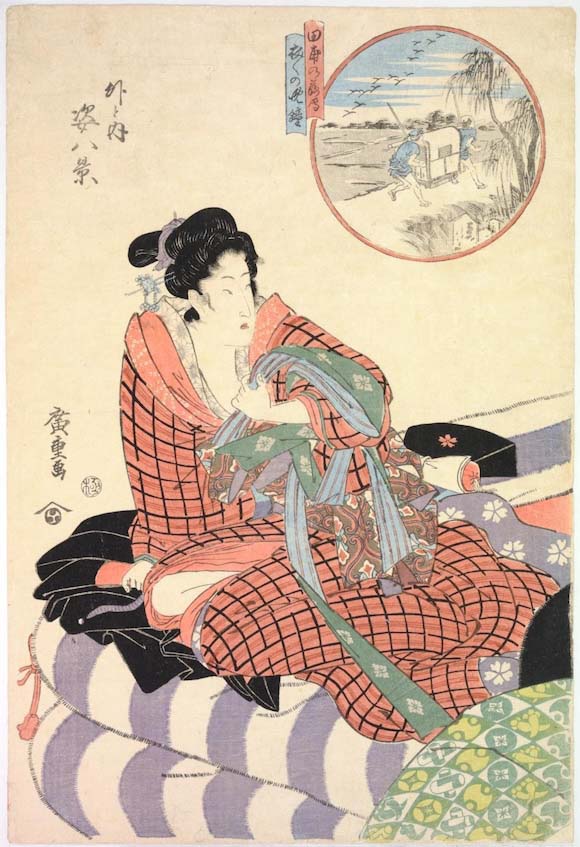
Geese Alighting on Rice Fields and the Evening Bell When Parting Ways from Eight Views of Figures Indoors and Out.
Source : Alan Medaugh, photography by Matsuba Ryōko.
Exhibition details – Hiroshige: Artist of the Open Road at the British Museum, London
The Hiroshige: Artist of the Open Road exhibition is being shown at the British Museum, Great Russell Street, London WC1B 3DG. The exhibition runs from the 1st of May to the 7th of September 2025.
For further information on ticket prices and group bookings, please contact the British Museum directly.