Using paper to create futuristic, biodegradable packaging

Paper packaging is driving sustainable change. We investigate the eco-benefits of biodegradable paper packaging.
Paper packaging is driving sustainable change. We investigate the eco-benefits of biodegradable paper packaging.
Did you know that … paper is being used to create futuristic, biodegradable packaging?
As we face the serious repercussions of plastic packaging both industries and researchers are turning to paper as an eco-friendlier alternative. Paper-based packaging materials are both biodegradable and incredibly versatile. Paper may just be the perfect solution for minimising the environmental harm caused by industrial packaging.
Paper is now being used for a remarkable variety of packaging for all types of products. Technological advances are allowing us to repurpose paper in a number of surprising ways. Smart paper packaging contains RFID tags for easy tracking. New water-resistant, highly durable coatings are allowing paper to be used as a replacement for single-use plastics for food wraps, beverage cartons, and cosmetic containers.
Paper has evolved beyond being just a medium for communication. It has transformed into a progressive material that is driving sustainability efforts. By reimagining paper packaging, we can reduce plastic pollution and move toward a cleaner, greener future.
The environmental impact of plastic vs paper packaging
As well as being an important medium for writing and art, paper is also one of the oldest forms of packaging. There are examples of paper being used as wrapping for food in China over two thousand years ago. Early forms of linen-based paper continued to be used as packaging throughout the world. Paper packaging really began to take off with the invention of the commercial cardboard box in 1817 and the invention of commercial paper bags in 1844. By 1905, the process of making paper bags was automated and the popularity of paper as a packing material surged.
It wasn’t until after the Second World War that paper packaging began to be replaced by plastic alternatives.
From the 1950s until the present day, plastic has gradually overtaken paper as the preferred packaging material.
Despite its convenience, durability, and versatility the dominance of plastic packaging has come at a severe cost to our environment. The entire process of producing plastic results in the emission of toxic chemicals into the environment. Every year the world produces an estimated 350 million tonnes of plastic waste.
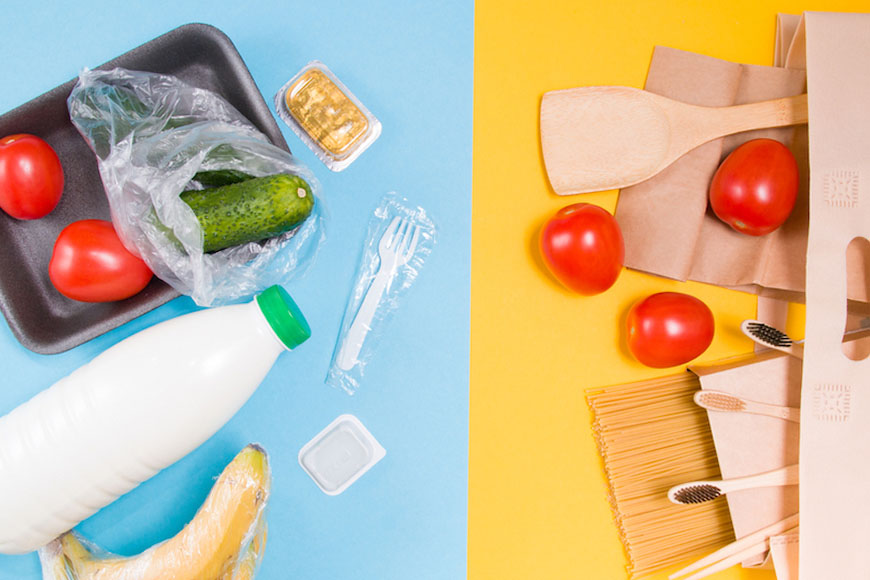
Plastic packaging for products in environmentally-friendly packaging
Source : Shutterstock
Plastic can take hundreds of years to decompose. The long life of plastic negatively impacts the environment by contributing to pollution, harming wildlife, and contaminating ecosystems. Less than 10% of all plastic produced is recycled.
In comparison, paper is biodegradable, recyclable, and can be made from renewable resources. Paper packaging breaks down much more quickly than plastic and has a lower environmental impact throughout its entire life cycle.
How innovative paper packaging is driving sustainability
There is a revolution happening in the packaging industry. Paper is reclaiming its position as the preferred packaging material. Paper-based packaging is now providing us with a more sustainable way for us to keep our food and our products safe.
Plastic-based food packaging is one use only, which creates mountains of waste. Durable, food-safe paper packaging is now being developed using barriers that protect against moisture, oils, and oxygen. Nanocellulose plant fibres are being incorporated into paper packaging to create lightweight, incredibly sturdy food packaging.
This type of paper packaging functions just like plastic but is fully biodegradable and, in some cases, even edible. Innovative manufacturers are combining paper with edible materials like seaweed to create food packaging that doesn’t need to be discarded: it can be eaten alongside the food it protects!
 Responsible consumption, zero waste concept.
Source : Shutterstock
Bottles can now be made from tightly wrapped biodegradable paper lined with plant-based materials. Manufacturers can now produce wine bottles made from 94% recycled paper. These bottles are five times lighter than traditional glass bottles and contain up to 77% less plastic than plastic bottles.
Biodegradable paper packaging is also replacing plastic for a range of non-food applications. Paper packaging reinforced with plant fibre is now used to house personal care items, household products, and consumer electronics.
Technology is allowing the production of smart paper packaging with integrated QR codes or NFC technology. Embedding RFID inlays directly into packaging materials enables precise tracking of products and easier inventory control. It also eliminates the need for separate paper labels.
RFID labels themselves can now be made almost entirely of paper with minimal plastic components. Researchers have also developed RFID tags combining paper with printable PET or conductive materials. These tags are ideal for applications such as access control, ticketing, and logistics.
It’s clear that the world needs a better alternative to plastic. To move forward, we need to look back and make new use of the many benefits of paper packaging. Combined with modern technology, this centuries old material could provide us with the sustainable packing solutions we need.
Sources
https://ohioline.osu.edu/factsheet/cdfs-133
https://ambalaj.org.tr/en/environment-history-of-packaging
https://www.statista.com/topics/5401/global-plastic-waste/
https://www.montereybayaquarium.org/stories/true-cost-plastic-pollution
https://www.mdpi.com/2079-6412/13/10/1705?
https://www.biooekonomie-bw.de/en/articles/paper-instead-plastic-sustainable-packaging-good-conscience
https://pmc.ncbi.nlm.nih.gov/articles/PMC8151435/
https://www.sciencedirect.com/science/article/pii/S2666833525000036
https://frugalpac.com/frugal-bottle/