The ultimate complete guide to strapping machines

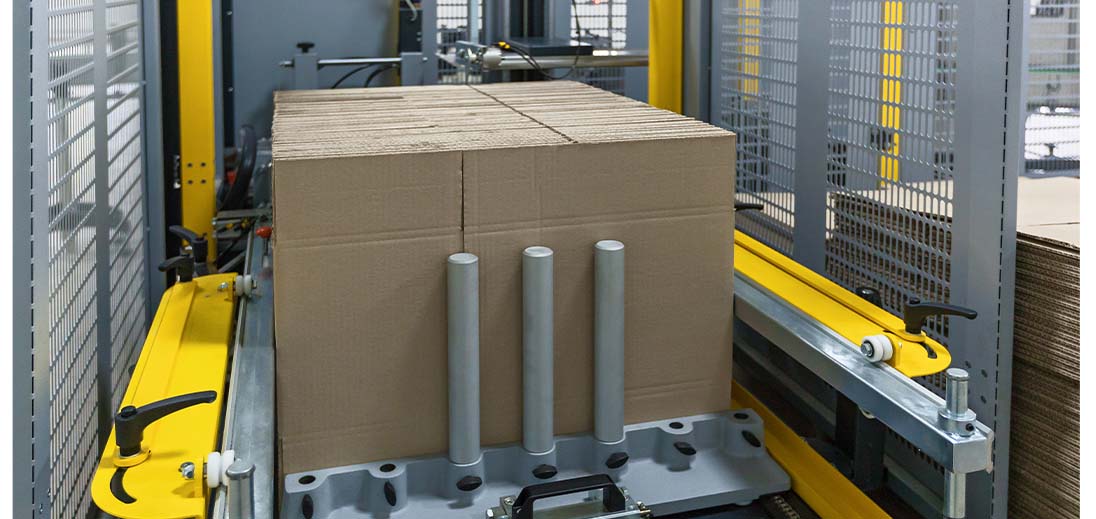
If your business activities involve the shipment of large quantities of goods, you may be interested in streamlining your packaging processes to increase efficiency and customer satisfaction. One way you can do this is by using strapping machines.
If your business activities involve the shipment of large quantities of goods, you may be interested in streamlining your packaging processes to increase efficiency and customer satisfaction. One way you can do this is by using strapping machines.
What is a strapping machine?
A strapping machine adds plastic or metal strapping to parcels and packages in order to make them stronger and more secure. They can be especially useful if you’re shipping large quantities of an item on a pallet, for example, as the machine can strap crates of items together for easy transportation as a single mass.
How does a strapping machine work?
There is some variation between the different types of strapping machines available, expanded upon below, but the main process remains the same. A parcel or group of parcels is positioned onto the flat surface of the machine, ready for strapping. Then the strap is fed over and around the package, tightened and secured.
Different types of strapping machines
As touched on above, there are different types of strapping machines, which are mainly categorised by the amount of human intervention needed. Aside from manual strapping tools which require full human involvement, there are two types of strapping machines: automatic and semi-automatic.
Automatic strapping machines
As the name suggests, automatic strapping machines do almost all of the job for you. You’ll still need a member of staff on hand for supervision and to do small tasks, but the majority of the strapping process will be carried out by the machine.
If you choose an automatic strapping machine, your worker will simply need to position the package correctly on the flat surface of the machine, push a button to set the process going, and then remove the package once it’s done. Automatic strapping machines are at their most efficient when you’re dealing with high volumes of parcels with a quick turnaround deadline.
Since they take over a larger proportion of the overall work, automatic strapping machines tend to be more expensive initially. However, with more streamlined operations and greater time-savings on offer, these machines can quickly pay for themselves and have a real impact on your bottom line.
Semi-automatic strapping machines
Although they require a little more intervention from a human than their automatic counterparts, semi-automatic strapping machines still take most of the labour out of the strapping process. If you opt for this type of strapping machine, your member of staff will need to position the package on the strapping surface, then feed the strap from one side of the parcel to the other manually. Then, simply push a button and the strapping will tighten and secure itself automatically.
Due to the need for extra human involvement, semi-automatic strapping machines are best for smaller volumes of parcels, where the additional attention to detail given by a human operator is valued highly in the process. Semi-automatic strapping machines are usually a more affordable option, particularly for smaller businesses that are looking to improve the cost-efficiency of their business processes. However, it’s also worth considering the types of parcels that need strapping. If, for instance, they are fragile packages that require careful handling, a semi-automatic strapping machine may be the better option.
Do strapping machines improve efficiency?
The benefits of packaging automation are well known, but it can be tempting to assume that a simple task such as strapping packages can’t get any more efficient than it already is. That, however, is incorrect.
Firstly, strapping machines take on the majority of the labour involved in the strapping process, removing the potential for human error during those steps. This saves time, money and resources by getting things right the first time, every time - and if the resulting impact on your bottom line isn’t enough motivation, reducing wastage is also great news for the environment.
Secondly, using machines to do the bulk of the work enables you to use your human resources more efficiently. With automatic or semi-automatic strapping machines, you can have a single worker supervising two or more machines at the same time, resulting in more packages strapped in a shorter time.
Finally, using mechanised packaging solutions can improve your employees’ wellbeing, shielding them from injuries associated with repeated manual tasks such as repetitive strain injuries, eye strain, and muscle fatigue. Less fatigue and injury means less interruption to business processes, and a happy, healthy workforce is also more likely to be a productive and successful one.
To find out more or discuss your strapping options, contact our packaging experts today.