Find the best solution for your unit load security and reduce your film consumption
Packaging, News, Packaging, Packaging case studies, Packaging expertise
The ultimate guide to stretch wrap
22 Jan 2024 —

Used to secure goods and packages on pallets for storage or transportation, stretch wrap is a staple for many retail businesses. However, with different types of wrapping available, as well as a range of different methods of using it, knowing where to start with this handy material can be tricky.
Used to secure goods and packages on pallets for storage or transportation, stretch wrap is a staple for many retail businesses. However, with different types of wrapping available, as well as a range of different methods of using it, knowing where to start with this handy material can be tricky.
In this guide, we explain exactly what stretch wrap is and highlight its key benefits. We also explain how to best optimise your use of stretch wrap to ensure your packaging operations are as safe and efficient as possible.
What is stretch wrap?
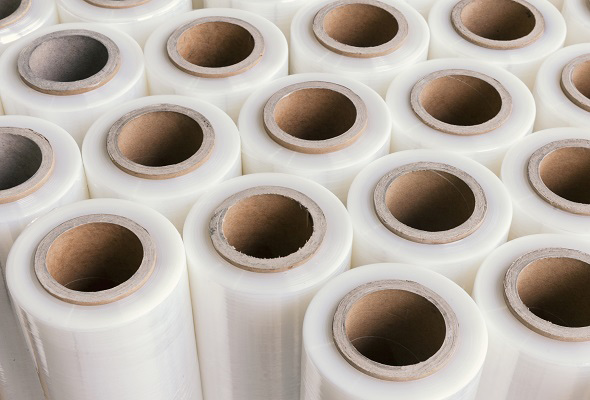
Before looking at the benefits of this useful material, it’s first important to understand what stretch wrap actually is. Put simply, stretch wrap is an elastic-like plastic film that adheres to the object it is being stretched around. Ultimately, this creates a tight and protective wrap around objects that both holds loose items together during transit and also protects them against things like damp when pallets are put into storage.
What is stretch wrap made of?
The vast majority of commercially-used stretch wrap materials are made from LLDPE (linear low-density polyethylene). This is a form of plastic designed for its strength and stretchability. It is this unique elastic-quality that means stretch wrap is able to keep products tightly bound and offer a certain level of water resistance.
Is stretch wrap recyclable?
The simple answer is, yes, stretch wrap can be recycled. However, due to the materials involved, it’s not always an easy process. LLDPE sits in Category Four for recycling purposes. This means you may need to find a specialist recycling centre to process your stretch wrap waste.
Although stretch wrap is not easily recyclable in traditional municipal recycling, it’s worth noting that many producers now offer specialist stretch wrap made from recyclable materials or with additives that facilitate recycling. Here at Antalis, for example, our Blown Hand Stretch Film range is made with 30% recycled content. This means, if you opt for this film, you’re using a more sustainable wrap and are also saving money as these products are exempt from the UK's Plastic Packaging Tax.
What are the benefits of stretch wrap?
Package protection
Stretch wrap tightly clings to items and pallets. This means it can keep loose items together and provide a secure and protective layer against dust, moisture, and other external elements. Naturally, this protective layer also minimises the chances that items become contaminated in storage or interfered with in transit.
Safety
Stretch wrap helps to prevent injuries. When items are not properly fastened together, those working in storage facilities, and/or in jobs connected to the transportation of goods, can be injured by loose items. Stretch wrap is an effective method of keeping loose items together in one package, keeping staff safe.
Versatility
Unlike rope or bungee cords, due to its elastic-like qualities stretch wrap can be used to hold items of all different shapes and sizes together. This means it can be used in almost any product-based industry when it comes to storage and shipping.
Cost-effective
When it comes to keeping loose items together, stretch wrap is very cost-effective. This is because, when compared with many other packaging methods, stretch wrap requires less material to secure items into one package.
Visibility
Stretch wrap is usually transparent. This means items can be easily identified. This is important for both internal inventory checks and third party inspections during transit.
Types of stretch wrap
As a rule of thumb, all stretch wrap fall into one of two categories. These are blown stretch wraps and cast stretch wraps.
What is the difference between blown and cast stretch wrap?
Blown stretch wrap, such as Antalis’ Master’in Performance blown hand stretch film, is made by blowing heated resin into a bubble, which is then cooled and flattened into rolls. This type of wrap is usually thicker and more puncture-resistant than cast wrap, and is therefore most commonly used for irregularly shaped loads or heavy products with sharp edges.
On the other hand, as the name suggests, cast stretch wrap is produced using a cast extrusion process. This wrap is most commonly used for light loads that are typically stacked on pallets. This film is also usually clearer. This makes it ideal for environments where wrapped items contain barcodes or labels that need to be scanned through the film.
How much stretch wrap is needed per pallet?
In order to keep your packaging and shipping operations as safe and cost efficient as possible, it’s important to be able to determine the correct amount of stretch wrap needed per pallet. Of course, there is no one-size-fits-all approach to this, and several factors come into play. These include the size and weight of the load you are wrapping, the type of stretch wrap you have, and the wrapping methods you are using. After all, if you are manually wrapping a light load using cast stretch wrap, the quantity of wrap needed is obviously going to differ compared with if you’re using a blown stretch wrap machine to wrap a heavy load.
With this in mind, in order to best optimise film usage, it could be worth investing in stretch wrapping machinery. These machines are designed to apply the stretch wrap consistently, minimising waste and ensuring a secure wrap. Additionally, it’s important to think about the type of film you are using. High-quality wraps with advanced stretch capabilities often require less material to achieve the same level of load stability. Indeed, cheap stretch wrap is typically a false economy.
Here at Antalis, we understand that by choosing the right stretch wrap material and employing the right methods and machinery, businesses can enhance the security of their products while minimising environmental impact and operational costs. That’s why we offer our stretchCONSULT service. This comprehensive four-step audit of your use of stretch wrap will highlight the strength and weaknesses of your current processes and recommend cost-saving efficiencies.
Find the best solution for your unit load security and reduce your film consumption
stretchCONSULT