
Carbonless Paper
Available in various colours, sizes, and grammages, these papers ensure hassle-free performance for litho offset and digital presses. Pre-collated sets and ancillary products like self-separating glue and desensitizing ink enhance efficiency for business needs.


Most Popular Products

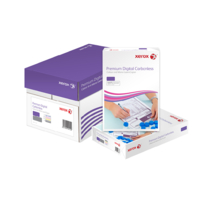


What are carbonless paper products, and how do they work?
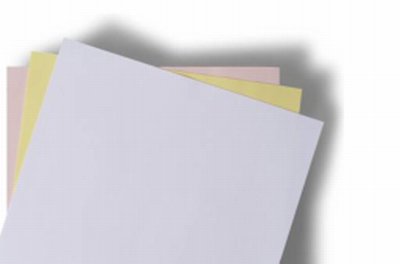
Carbonless papers replicate information, such as text or signatures, across multiple sheets without a sheet of carbon paper between each page. This is achieved through microcapsules containing dye on the back of Coated Back (CB – Top Sheet) sheets and a reactive coating on Coated Front sheets. When pressure is applied, like writing or printing, the microcapsules break, this triggers a chemical reaction that transfers the image to the sheets below.
How does the CB, CFB, and CF layering in carbonless paper sets function?
• CB – Top Sheet (Coated Back): The top sheet contains microcapsules on its reverse side, which release dye when pressure is applied.
• CFB – Middle Sheet (Coated Front and Back): Positioned in the middle, it has a reactive coating on the front to receive the image and microcapsules on the back to pass it on.
• CF – Bottom Sheet (Coated Front): The bottom sheet has a reactive coating on its front, which finalises the image transfer, completing the multi-part form.
What is the difference between pre-collated and standard carbonless paper sets?
Pre-collated sets are pre-assembled in specific sequences, such as two, three, or four-part forms, ready for use in offset or digital printing. This eliminates the need for manual collation, saving time and reducing errors. Standard carbonless papers, by contrast, require manual assembly into the desired order before printing or use.
How do digital-specific carbonless paper products improve printing efficiency?
Digital-specific carbonless papers are tailored for use with dry-toner digital printers, ensuring seamless printing for on-demand forms. They support barcodes, logos, sequential numbering, and personalised data. Available in CB, CFB, and CF options, these papers optimise printing performance, reduce waste, and deliver sharp, high-quality results. Additionally, digital printing allows for much shorter print runs, making it ideal for businesses that require flexibility and cost-effective production of custom forms.