
The Human Touch: Turning Sustainable Materials into Reality

Selecting lower-impact materials for retail displays is about more than substrate choice alone. Claire White explains why physical sampling and technical consultancy are essential to matching certified fibre-based boards, recycled-content textiles, and PVC-free films to real-world project briefs and end-of-life routes.
Selecting lower-impact materials for retail displays is about more than substrate choice alone. Claire White explains why physical sampling and technical consultancy are essential to matching certified fibre-based boards, recycled-content textiles, and PVC-free films to real-world project briefs and end-of-life routes.
From material supplier to strategic partner
Brands are increasingly looking to reduce their reliance on virgin fossil-based plastics by selecting substrates with certified renewable or recycled content and planning for post-campaign recycling streams. Yet making the switch can still feel risky when aesthetics, performance, budgets and deadlines all need to be protected.
For Claire White, Head of Specification at Antalis UK, the solution lies in combining two forms of “human touch”: physically experiencing materials and drawing on specialist expertise. Recently appointed the first female President of the Shop and Display Equipment Association (SDEA), alongside her involvement with POPAI UK’s Sustainability Council, Claire brings a broad industry perspective to her work with brands, retailers and designers.
We spoke to her about changing attitudes to sustainable materials and why a sample can sometimes achieve more than a technical data sheet.
How does your broader industry perspective influence your day-to-day role as a retail specification expert at Antalis UK?
Claire White: "Historically, material specification was largely reactive: advising on the right material for an application, providing a technical data sheet and considering the job done.
Today, the role is far more strategic. Success requires balancing aesthetics, functionality, budget, sustainability and circularity, while staying ahead of rapidly evolving market trends.
Through my involvement with SDEA and POPAI, I gain first-hand insight into emerging trends, retailer priorities and changing market challenges. This enables me to make more informed recommendations and help clients choose materials that support both immediate project requirements and longer-term business objectives.
For Antalis, this reinforces our position as a strategic partner rather than simply a material supplier."
What still prevents brands and retail designers from changing their material habits?
Claire White: "One of the biggest barriers is the perception that switching from traditional, fossil-based materials to fibre-based or recyclable alternatives will significantly increase costs. In practice, for short-term indoor point-of-sale displays and window graphics, several paper-based boards and self-adhesive paper films can be specified at a comparable, and sometimes cheaper unit cost to the conventional substrates they replace.
There is also concern about compromising on quality, appearance or performance. But today’s eco-alternative solutions can often deliver the same, if not better, results while providing clear end of life recyclability within standard streams.
The challenge is increasingly about changing long-held perceptions. That is why education and collaboration matter. At Antalis, our Specification Consultants work closely with brands, designers, and retailers to demonstrate what's possible through material samples, case studies, prototypes, and real-world projects. Seeing a solution perform in practice is often what gives clients the confidence to make the change. Confidence comes from evidence.
End-of-life must also be considered. A material may be recyclable, but if the appropriate collection and recycling streams are unavailable, its environmental potential cannot be fully realised."
Why is physically testing alternative display substrates so important?
Claire White: "In today's digital world, clients can access product information, sustainability claims and technical data in seconds. But when it comes to alternative materials, there is still no substitute for hands-on experience.
Design is an inherently sensory process. By holding a sample, designers and converters can assess texture, weight, finish, printability, rigidity and overall suitability in a way that a screen simply cannot replicate.
More importantly, physical samples also build trust. Clients can judge quality and performance themselves rather than relying solely on specifications or marketing messages.
Ultimately, touch turns a promise into proof. For many buyers, that physical interaction transforms interest into conviction - and conviction into a purchasing decision."
How do tools such as Antalis’s Ecobox change the specification process?
Claire White: "They allow stakeholders to compare 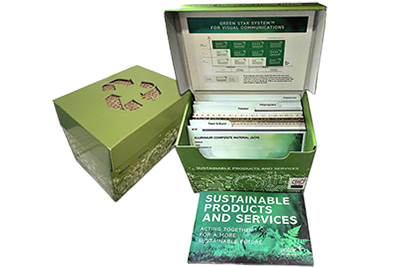 materials firsthand, and review each product's raw material origin and end-of-life recyclability ratings under Antalis's internal Green Star System.
Having sustainable alternatives immediately available also helps teams align more quickly. It becomes easier for an internal champion to secure buy-in from colleagues in design, marketing, procurement, sustainability and operations.
A physical sample often speaks louder than a presentation or technical specification. Ultimately, tools like Ecobox do far more than support specification: they help build consensus, simplify conversations and turn sustainable ideas into approved projects faster."
What is the true value of the human support provided by Antalis experts?
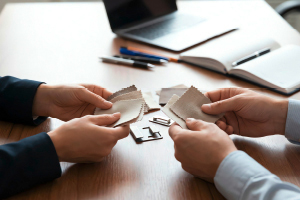 Claire White: "A visually attractive sample box can showcase a material and provide basic information, but expert consultancy unlocks its full potential. Specification Consultants provide the technical guidance needed to turn a promising substrate into a successful application. That means considering everything from printing and ink compatibility to routing, installation, durability, budget and sustainability requirements.
This combination helps customers specify with confidence and minimise risk, ensuring that the solution does not simply look good on paper but performs successfully in practice."
Do you have a concrete success story to share with us?
Claire White: "I recall working with a premium fashion retailer looking to improve the sustainability of its POS, window displays and in-store graphics. The design team wanted more "sustainable substrates" but was concerned about maintaining the quality, durability and premium appearance required across multiple stores.
Providing physical samples allowed the client to see and feel the materials, demonstrating that alternative materials could deliver the expected finish. However, it was the consultancy and support I provided that ultimately unlocked the project. Through detailed discussions, I was able to recommend a solution that balanced sustainability, performance and budget without compromising the brand aesthetic. The retailer successfully implemented the new material across its store estate.
For me, it was a powerful example of how combining physical samples with expert consultancy can transform sustainability ambitions into practical commercial reality."