
What is visual communication?

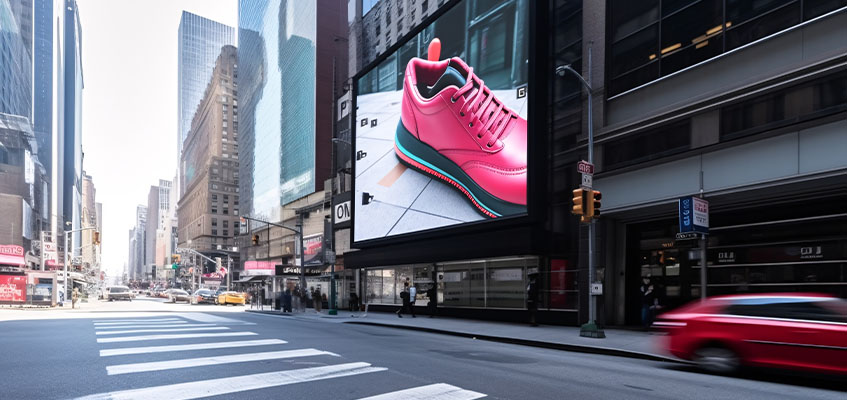
Visual communication is something that is all around us, from the billboards and posters we see when we leave the house to the signage and point of sale we see in retail shops. It interests marketers because of its power to promote products, services and brands, but more generally, it can be used to educate, inspire and entertain.
Visual communication is something that is all around us, from the billboards and posters we see when we leave the house to the signage and point of sale we see in retail shops. It interests marketers because of its power to promote products, services and brands, but more generally, it can be used to educate, inspire and entertain.
In essence, visual communication is a deeply intuitive type of storytelling. Its power stems from the fact that it can be used to convey ideas, even complex ones, in a way that people grasp almost instantaneously.
In this post, we explore why this type of communication is so important. We also offer examples from the marketing sphere of how businesses can capitalise on their potential to promote their goods and services.
Why visual communication is important
From the perspective of companies looking to attract customers and increase their sales, visual communication is one of the most important tools in their marketing toolbox. But why exactly? Below, we break down some of the key benefits of this type of promotion.
It grabs attention
Information overload is something that now impacts consumers across many parts of the world. There is so much advertising noise that it can be hard for businesses to grab the attention of their target audience. In this context, visual communication tools can be extremely valuable in helping to break through into people’s consciousness.
For example, it takes just a moment to see, understand, and digest the information presented in well-designed posters, billboards, window displays and other visual marketing materials. In contrast, understanding the same information delivered through written or spoken words (for example, in text-based or radio ads) can take much longer. People are more likely to simply tune out such messaging because they lack the time and attention span to process it.
For this reason, visual communication can deliver brand messages more effectively and reach a wider audience than many other types of promotion.
It has a lasting impact
Image or video-centric marketing material can also have a more lasting impact on consumers. People are more likely to create long-term memories based on information that is presented visually, compared with information given in written or spoken language. This may be largely because of the simplicity of visual advertisements. It is generally a lot easier for people to recall the details of a visual ad than other types of promotions, particularly if the ad is striking to look at.
Researchers have described this phenomenon as the picture-superiority effect. The idea is that all else being equal, people remember pictures better than words.
It boosts engagement levels
For the reasons outlined above, visual communication can be a particularly effective way to drive brand engagement and in turn, boost sales. By allowing you to get your message out there as clearly and effectively as possible to your target audience, this type of marketing can help you to raise your brand profile and grow as a business.
Visual communication examples
The potential of visual communication to marketers is clear. So, what types of visual communication might you be able to harness to benefit your company?
Instore advertising
- From digital signage and video walls to posters, A-boards, overhead messaging, and point-of-sale displays, there is a plethora of in-store advertising materials that can help you promote your products and services.
Outdoor advertising
- The options when it comes to outdoor signage are arguably even more diverse. From billboards and large-format advertising posters to micro-perforated adhesives that allow you to market your brand on buses and trains, there are so many different ways to get your message out there.
Window graphics
- Overlapping with both in-store and outdoor advertising options, window graphics can be used to display your marketing messages on interior or exterior glass. There are many different materials that you can use to create these displays, and they are suitable for environments ranging from shops and offices to hotels. Choose from transparent, frosted and opaque materials.
Exhibition graphics
- When you create a stand at an exhibition, you are competing with a potentially large number of other businesses and organisations for the attention of the people in the hall. Thankfully, there is no shortage of graphic display solutions available to help you do this. From banners and canvases to foam boards and front and backlit polyester films, you can choose display solutions that get your message across.
If you would like further information and advice on the types of visual communication resources available, don’t hesitate to contact our team.